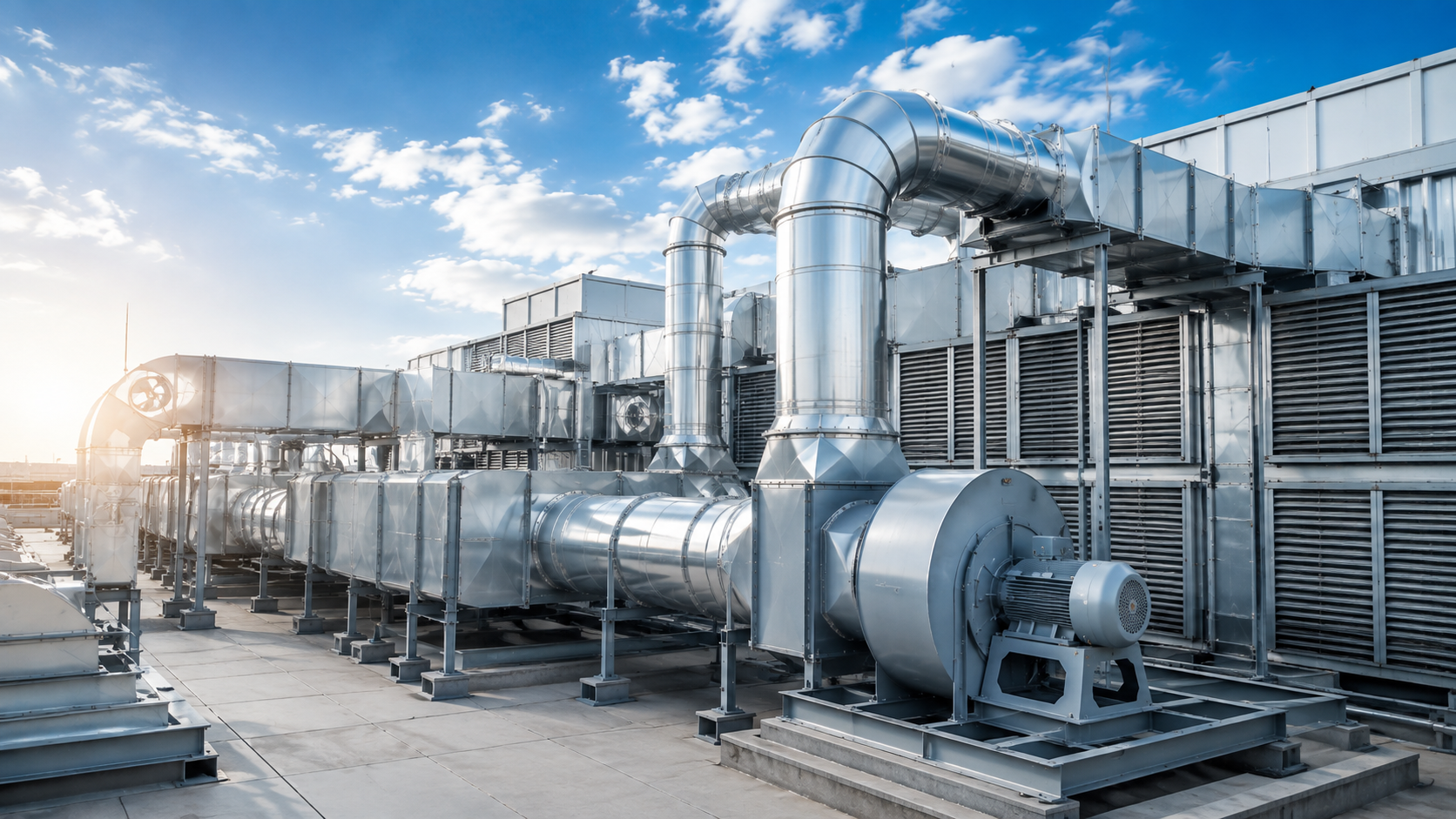
Industrial Ventilation Systems in Bangalore: A Complete Guide to Better Airflow
September 1, 2026
Industrial Ventilation Systems in Bangalore: A Complete Guide to Better Airflow
Proper ventilation is essential for maintaining a comfortable, productive and efficient environment in factories, warehouses, commercial kitchens, hospitals, offices and other industrial facilities. A well-designed industrial ventilation system helps manage heat, stale air, fumes, dust and other airborne contaminants while supporting better airflow throughout the facility.
Businesses looking for industrial ventilation systems in Bangalore need solutions designed according to their building layout, airflow requirements and specific application. From GI ducting and exhaust systems to fresh air systems, centrifugal blowers and axial flow fans, choosing the right equipment can improve overall air movement and system performance.
What Is an Industrial Ventilation System?
An industrial ventilation system is designed to control and move air within a commercial or industrial space. Depending on the application, the system can supply fresh air, remove hot or contaminated air, improve air circulation or support temperature management.
A typical industrial ventilation setup may include:
- GI ducting systems
- Industrial exhaust systems
- Fresh air systems
- Centrifugal blowers
- Axial flow fans
- Roof exhaust fans
- SS kitchen exhaust hoods
- Custom ventilation ductwork
The right combination depends on the size of the facility, the type of work being carried out and the required airflow.
Why Is Industrial Ventilation Important?
Industrial and commercial spaces can generate significant amounts of heat, smoke, odours, dust and fumes. Without proper air movement and extraction, these conditions can affect workplace comfort and operational efficiency.
A professionally planned ventilation system can help:
Improve Air Circulation
Properly positioned fans and ducting help distribute and remove air efficiently throughout the facility.
Remove Heat and Stale Air
Industrial exhaust systems can help reduce heat buildup in factories, warehouses and production areas.
Support Fresh Air Supply
Fresh air systems bring outdoor air into commercial and industrial buildings through properly designed intake and distribution systems.
Control Smoke, Odours and Fumes
Exhaust systems are commonly used in manufacturing facilities, commercial kitchens and other environments where airborne pollutants need to be extracted.
Improve Overall System Performance
Correct duct design and suitable fan selection can support efficient airflow and reduce unnecessary resistance within the system.
GI Ducting for Industrial and Commercial Applications
GI ducting is an important part of many HVAC, ventilation, exhaust and fresh air systems. Galvanized iron ductwork can be fabricated in different shapes and sizes to suit the available space and airflow requirements.
GI ducting is commonly used for:
- Industrial ventilation
- Commercial HVAC systems
- Fresh air distribution
- Exhaust air systems
- Factory ventilation
- Warehouse airflow systems
- Commercial buildings
- Hospitals and institutions
Custom fabrication allows the duct layout to be designed according to the building structure and project requirements.
Choosing Between Axial Flow Fans and Centrifugal Blowers
Fan selection plays a major role in ventilation system performance.
Axial Flow Fans
Axial flow fans are generally suitable for applications requiring high volumes of air at relatively lower pressure. They are commonly used for general ventilation, factory cooling and air circulation.
Centrifugal Blowers
Centrifugal blowers are commonly used where higher pressure is required to move air through ductwork. They can be suitable for industrial exhaust, HVAC systems and other applications with greater airflow resistance.
The correct selection should consider airflow requirements, static pressure, duct length and the operating environment.
Fresh Air Systems for Better Indoor Airflow
A fresh air system is designed to introduce outdoor air into a building or facility. These systems can be used in offices, commercial buildings, hospitals, industrial facilities and other enclosed spaces.
A properly designed fresh air system may include intake ducting, louvers, filtration components and distribution networks.
When planning a fresh air system, factors such as occupancy, building use, airflow requirements and existing HVAC infrastructure should be considered.
Industrial Exhaust Systems for Factories and Commercial Spaces
An industrial exhaust system is designed to remove unwanted air from a facility. Depending on the application, the system may extract heat, smoke, fumes, odours or dust.
Common applications include:
- Manufacturing plants
- Warehouses
- Commercial kitchens
- Food processing facilities
- Workshops
- Industrial units
- Mechanical rooms
- Large commercial buildings
The system usually combines exhaust fans or blowers with properly designed ducting to direct extracted air to the appropriate discharge location.
Commercial Kitchen Exhaust and SS Hoods
Commercial kitchens require effective ventilation to manage heat, smoke, grease and cooking odours. A kitchen exhaust system may include an SS kitchen hood, grease filters, ducting and an exhaust blower.
Custom kitchen exhaust solutions can be designed according to the cooking equipment and kitchen layout. Proper hood positioning and exhaust ducting are important factors in achieving effective air capture and removal.
How to Choose the Right Ventilation System
Before selecting an industrial ventilation or exhaust system, consider the following factors:
1. Type of Application
A factory, warehouse, commercial kitchen and hospital may all have different ventilation requirements.
2. Required Airflow
The required volume of air movement helps determine the appropriate fan or blower capacity.
3. Static Pressure
Longer duct runs, bends, filters and other components create resistance that must be considered when selecting equipment.
4. Available Installation Space
The building layout determines the possible location of ducting, fans, blowers and roof exhaust units.
5. Material Requirements
GI, stainless steel and mild steel components may be selected depending on the application and operating environment.
Why Choose a Professional Industrial Ventilation Contractor?
Industrial ventilation is more than simply installing a fan or duct. Proper planning can involve airflow calculations, duct routing, equipment selection, fabrication, installation and coordination with the building layout.
Sri Venkateshwara Air System provides industrial and commercial ventilation, ducting and exhaust solutions for projects in Bangalore and surrounding areas. The company offers services including GI ducting, axial flow fans, centrifugal blowers, roof exhaust systems, fresh air system fabrication, SS kitchen exhaust hoods and SS and MS fabrication.
From custom fabrication to installation, choosing an experienced ventilation contractor can help businesses develop a solution suited to their operational requirements.
Conclusion
An effective industrial ventilation system can play an important role in maintaining airflow, managing heat and supporting cleaner indoor environments. Whether you require GI ducting, an industrial exhaust system, fresh air solutions, axial flow fans or centrifugal blowers, the system should be designed according to the specific needs of the facility.
For industrial ventilation systems in Bangalore, working with an experienced supplier and fabrication team can help ensure that ducting, fans, blowers and exhaust equipment are properly coordinated for the application.
Contact Sri Venkateshwara Air System to discuss your industrial ventilation, HVAC ducting, fresh air or exhaust system requirements.